
IPAF Card & Certificate: How to Get, Check & Renew Your IPAF Licence
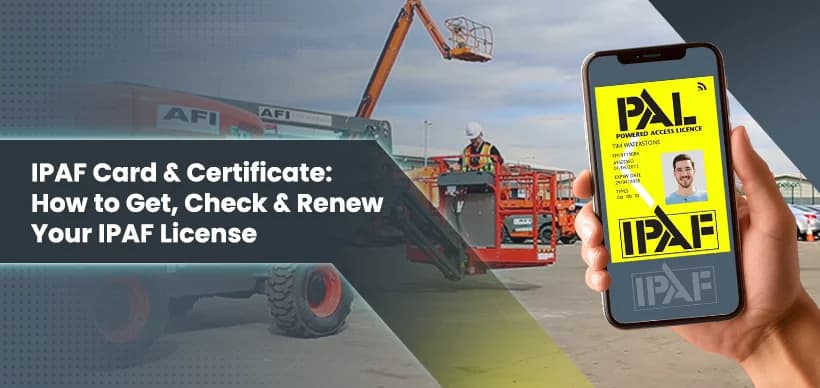
The PAL Card is the physical proof that ties an operator to their IPAF certification, but knowing how to get one, how to check whether someone else's is genuinely valid, and how to renew it before it expires matters just as much as knowing what the card represents. This guide covers all three.
For the full IPAF overview, see our pillar guide: The Complete Guide to IPAF Training: Courses, Categories & Certification.
What Is an IPAF Card?
An IPAF card, officially the PAL Card (Powered Access Licence), is issued to an operator upon successful completion of both the theory and practical components of an IPAF course. Alongside the card, candidates also receive an IPAF Certificate of Training for the specific category completed, and an operator logbook used to record the machines operated over time.
What Is a PAL Card Made Of, and What Does It Show?
Current PAL Cards are issued as Smart PAL Cards, featuring:
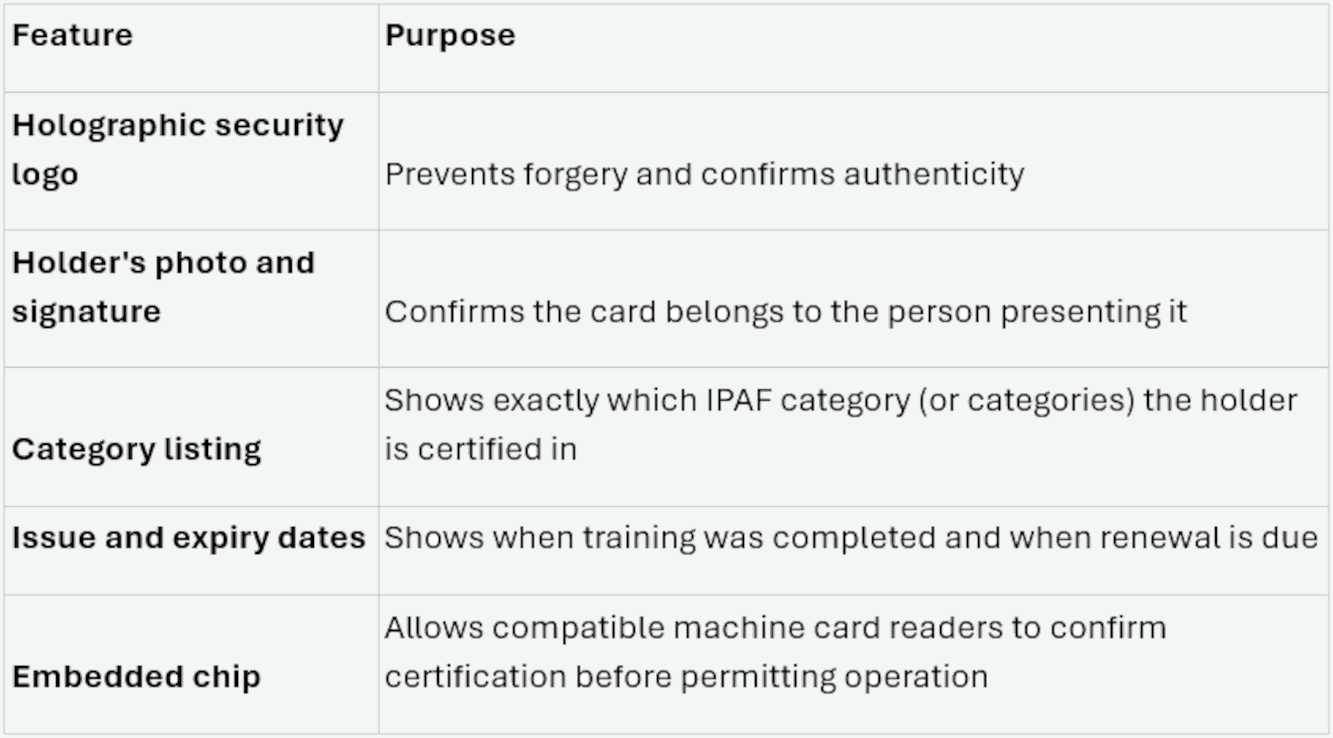
Site supervisors checking a card should confirm the category matches the machine being operated and that the card hasn't expired — not simply that a card exists.
How Do I Apply for an IPAF Card?
You don't apply for a PAL Card directly — it's issued automatically once you complete the theory and practical assessments for an IPAF course through an IPAF Approved Training Centre, such as AFI Training. Booking onto the relevant category course is the actual application step; the card itself follows automatically upon passing.
How Long Does an IPAF Licence Last?
An IPAF PAL Card is valid for five years from the date of issue. This applies consistently across categories — a 3a certification and a 3b certification both follow the same five-year validity period, and holding a Dual 3a & 3b card doesn't extend validity beyond the standard term either.
How Do I Renew My IPAF Card?
Renewal requires completing a refresher training course before the current card expires, combining an updated theory review with a practical reassessment to confirm continued competence. We'd recommend booking renewal training four to six weeks before your card's expiry date to allow time for scheduling and for the new card to arrive, rather than waiting until the card has already lapsed.
From January 2024, IPAF introduced a logbook entry requirement for renewal eligibility, which has increased year on year:
Operators who haven't kept their logbook up to date may need to complete additional assessment as part of renewal, so maintaining logbook entries throughout the certification period — not just before renewal is due — is worth building into standard practice.
What Happens If My PAL Card Expires?
Once a PAL Card expires, the operator is no longer certified for that category, which typically means losing site access for MEWP operation until renewal training is completed. Most employers will stand an operator down from MEWP duties once certification lapses, which can affect both scheduling and pay, another reason to book renewal well ahead of the expiry date rather than reactively.
How Do I Check If an IPAF Card Is Valid?
IPAF operates an online PAL Card verification tool that allows employers, site managers, and other third parties to check whether a card is genuine and currently valid, without relying solely on the physical card itself. To check a card, you'll typically need the holder's details, name, date of birth, and card number, which are then checked directly against IPAF's central records.
This matters particularly during site inductions involving subcontractors or agency staff, where a site manager may have no direct knowledge of the individual's training history. Verifying a card takes only a few minutes and confirms both authenticity and current validity status, closing a real liability gap that accepting a card at face value leaves open.
What If I Lose My PAL Card?
A lost PAL Card can typically be replaced through IPAF directly without needing to retake the full training course, provided the underlying certification hasn't expired. Contact IPAF or your original training provider promptly if your card is lost, since being unable to produce valid proof of certification can still cause site access issues even if your underlying qualification remains valid.
Getting Certified Through AFI Training
As an IPAF Approved Training Centre, AFI Training issues PAL Cards directly upon successful course completion, and our team can support both first-time certification and renewal training across all IPAF categories, at any of our 14 UK training centres.
For category details specifically, see our guide: IPAF Categories Explained: 1a, 1b, 3a & 3b.
Frequently Asked Questions
1. What is an IPAF card?
An IPAF card, officially called a PAL Card (Powered Access Licence), is the physical proof of certification issued to an operator upon successful completion of an IPAF course.
2. How do I apply for an IPAF certificate?
You don't apply directly; booking and completing the relevant IPAF course through an approved training centre automatically results in a Certificate of Training and PAL Card upon passing.
3. How long does an IPAF licence last?
An IPAF PAL Card is valid for five years from the date of issue, consistently across all certification categories.
4. How do I check if an IPAF card is genuine?
IPAF operates an online verification tool that checks a card's authenticity and current validity against official records using the holder's name, date of birth, and card number.
5. How do I renew my IPAF licence?
Renewal requires completing a refresher course, combining updated theory and a practical reassessment, ideally booked four to six weeks before your current card expires.
6. What happens if my IPAF card expires?
The operator is no longer certified once the card expires, which typically means losing site access for MEWP operation until renewal training is completed.
7. How many logbook entries do I need for IPAF renewal?
From 2026 onward, IPAF requires evidence of a minimum of 60 logbook entries over the five-year certification period to qualify for standard renewal.
8. What is the difference between an IPAF certificate and a PAL Card?
The certificate is a document confirming completion of a specific category course; the PAL Card is the portable, checkable proof of certification that operators carry on site.
9. Can I get a replacement if I lose my PAL Card?
Yes, a lost PAL Card can typically be replaced through IPAF directly without retaking the full course, provided the underlying certification hasn't expired.
10. Is the PAL Card the same as being "IPAF qualified"?
Yes, holding a current, category-appropriate PAL Card is what being "IPAF qualified" or "IPAF certified" refers to in practice.
11. Does a Smart PAL Card work differently from an older-style card?
Smart PAL Cards include an embedded chip readable by compatible machine card readers, allowing some machines to restrict operation to verified, trained operators automatically.
12. Why does the PAL Card show a photo and signature?
These features, along with the holographic logo, help prevent misuse or fraudulent use of another operator's certification on site.
13. Can a site manager check my IPAF card without contacting me directly?
Yes, using IPAF's online verification tool, a site manager can confirm a card's validity independently using the holder's basic identifying details.
14. Does IPAF card validity differ between categories?
No, all standard IPAF categories carry the same five-year validity period from the date the card was issued.
15. Can AFI Training help me renew an IPAF card that's about to expire?
Yes, our team can book you onto renewal training well ahead of your expiry date; browse our IPAF courses or contact us directly to arrange renewal.