
The Complete Guide to IPAF Training: Courses, Categories & Certification
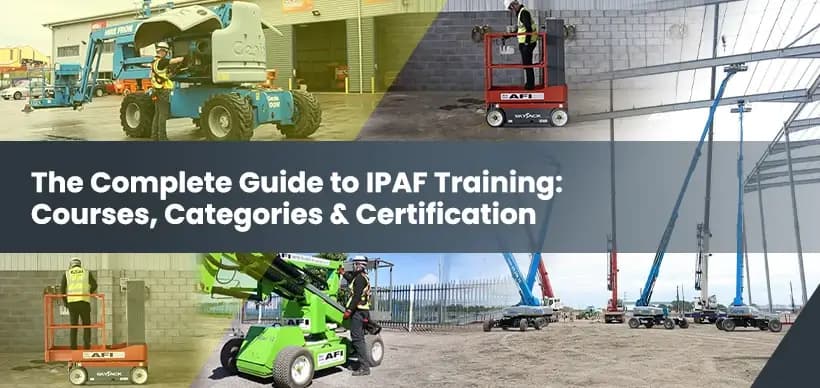
If you operate, manage, or hire out mobile elevating work platforms (MEWPs) in the UK, IPAF training is the standard your certification will be measured against by site managers, by contractors, and increasingly by insurers. This guide answers every core question about IPAF training: what it is, what the categories mean, what it costs, how long certification lasts, and how to get booked onto a course near you.
AFI Training is an IPAF and PASMA Approved Training Centre, delivering courses across 14 locations in the UK, training over 10,000 candidates a year, with 25+ years of experience in powered access and working-at-height training. You can browse our full range of IPAF courses directly, or keep reading for the complete picture.
What Is IPAF?
IPAF stands for the International Powered Access Federation. This global trade body promotes the safe and effective use of powered access equipment through technical guidance, safety campaigns, and a globally recognised operator training and certification programme. IPAF training is certified to conform with ISO 18878, the international standard for MEWP operator training, and is accepted as proof of competence by the UK's Major Contractors Group and the vast majority of construction and industrial sites across the country.
What Does IPAF Stand For?
IPAF is an acronym for the International Powered Access Federation. The organisation was founded to represent manufacturers, rental companies, and users of powered access equipment, and has since become the industry-recognised authority for MEWP operator training standards worldwide, not just in the UK.
What Is IPAF Training?
IPAF training is a structured course combining classroom or online theory with hands-on practical instruction and assessment, teaching an operator how to safely inspect, set up, manoeuvre, and operate a specific category of MEWP. It isn't a single blanket qualification; IPAF certification is issued by machine category, meaning the training an operator receives (and the PAL Card they're awarded) is specific to the equipment type they've actually been trained and assessed on.
What Is IPAF Training Used For?
IPAF training exists to reduce incidents involving powered access equipment on site. Working at height carries inherent risk, and MEWPs, for all their safety features, still require a properly trained operator to use correctly. Under the UK's Work at Height Regulations 2005, employers must ensure work at height is planned, supervised, and carried out by competent people using suitable equipment. IPAF training is the recognised route to demonstrating that competence for MEWP operation specifically, and LOLER 1998 and PUWER 1998 reinforce this by requiring lifting equipment to be used only by trained, authorised operators.
IPAF Categories: 1a, 1b, 3a & 3b
IPAF courses are organised by machine category, not as a single generic qualification. The table below summarises the four core categories.
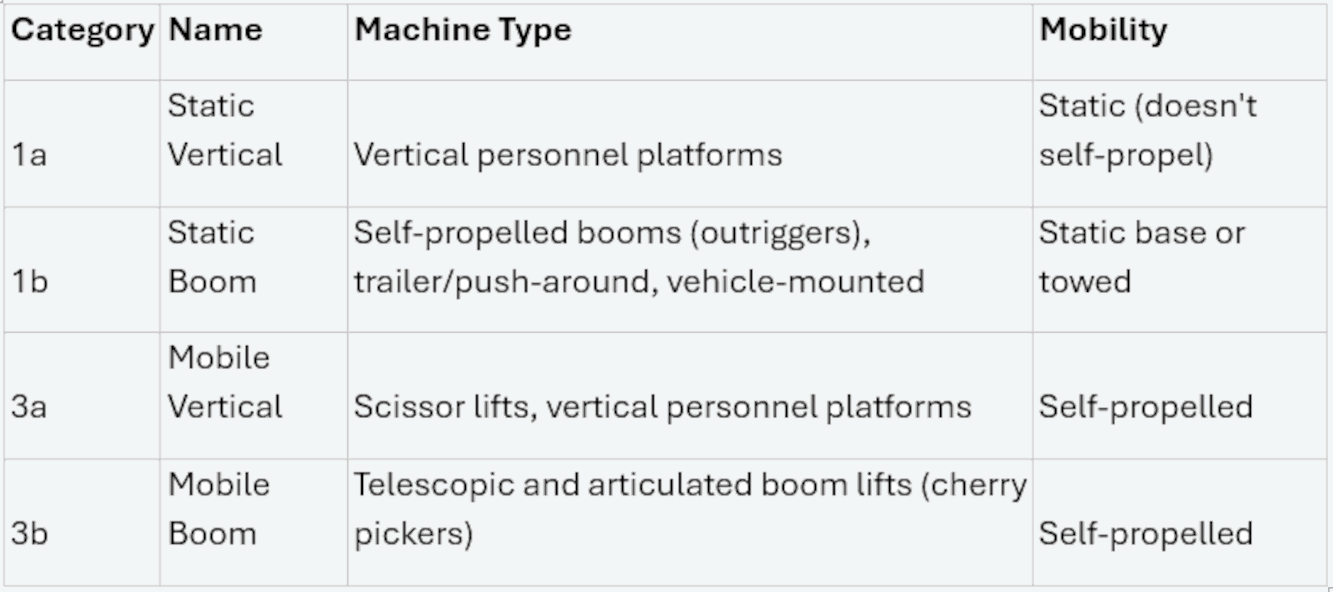
A combined Dual 3a & 3b course is also widely booked, covering both scissor lift and boom lift categories in a single programme, which suits most operators who'll realistically be running both machine types. We break this down in full detail, including which category applies to which specific machine, in our dedicated guide: IPAF Categories Explained: 1a, 1b, 3a & 3b — Which One Do You Need?
The IPAF PAL Card and Certificate
Successful completion of an IPAF course results in two things: an IPAF Certificate of Training for the specific category completed, and a PAL Card (Powered Access Licence card) — the physical, checkable proof of certification that operators carry on site. Current PAL Cards are issued as Smart PAL Cards, featuring a holographic security logo, the holder's photo and signature, and an embedded chip that can be read by compatible machine card readers to restrict access to trained operators only.
A PAL Card is valid for five years from the date of issue, after which renewal training is required. We cover the full renewal and verification process, including how to check whether someone else's card is genuinely valid, in our dedicated guide: IPAF Card & Certificate: How to Get, Check & Renew Your IPAF Licence.
MEWP Training: The Bigger Picture
"IPAF training" and "MEWP training" are often used interchangeably, and for good reason: IPAF is the dominant global standard for MEWP operator training. MEWP stands for Mobile Elevating Work Platform, the umbrella term covering scissor lifts, boom lifts, vertical mast lifts, and other powered platforms used to lift people to a working height. We cover the broader MEWP category, machine types, and how courses are structured across the full equipment range in our guide: MEWP Training Guide: Courses, Categories & Certification Explained.
For equipment-specific training details, see our dedicated guides on Scissor Lift Training & Licence and Cherry Picker Training & Licence.
IPAF Harness Training
Certain MEWP work, particularly on boom lifts, requires the use of a fall-restraint harness, and IPAF's Harness Awareness course covers correct fitting, inspection, and use of this equipment alongside standard operator training. We cover exactly what this course involves and why it matters in our guide: IPAF Harness Training: Why It's Required and What the Course Covers.
How Much Does IPAF Training Cost?
IPAF training cost varies by category, group size, and whether training is delivered as a single-category course, a combined course, or via online theory plus in-person practical assessment. Funding support is also available for many candidates. AFI Training is a CITB ATO-approved centre, meaning eligible employers can access CITB grant funding of up to £140 towards course costs. We break down exactly what drives the IPAF training price, and how to budget accurately, in our dedicated guide: How Much Does IPAF Training Cost? 2026 Price Guide by Category.
PAF MEWPs for Managers
Not everyone who needs IPAF-aligned knowledge is an equipment operator. The IPAF MEWPs for Managers course is designed for site managers, supervisors, and anyone responsible for planning or overseeing MEWP work, without necessarily operating the machines themselves. We cover this course in detail in our guide: IPAF MEWPs for Managers: What the Course Covers & Who Needs It.
IPAF Instructor and Demonstrator Training
For experienced operators looking to progress their career, IPAF offers pathways to become an approved Instructor or Demonstrator, training and assessing other operators rather than only operating equipment themselves. We cover both routes, including entry requirements, in our guide: IPAF Instructor & Demonstrator Training: How to Become a Trainer.
IPAF vs PASMA
IPAF and PASMA are sometimes confused, but they certify entirely different equipment; IPAF covers powered MEWPs, while PASMA covers unpowered, manually assembled mobile access towers. Many sites need both certifications across different team members. We cover the distinction fully in our guide: IPAF vs PASMA: What's the Difference and Do You Need Both?.
IPAF Certification and Your Career
Holding a current IPAF PAL Card is increasingly a baseline requirement for MEWP operator roles across UK construction, facilities management, and industrial sectors; many job postings list it as essential rather than desirable. We cover how IPAF certification affects hiring, pay, and career progression in our guide: IPAF Jobs: Career Paths, Salaries & How Certification Helps You Get Hired.
Finding IPAF Training Near You in the UK
AFI Training operates 14 training centres across the UK, with courses also deliverable on-site at a project location where facilities are suitable. For a full breakdown of locations, booking process, and what to expect from course day, see our guide: IPAF Training in the UK: Courses, Prices & Booking Guide, or use our training course locator to find your nearest centre.
Who Actually Needs IPAF Training?
IPAF training isn't limited to full-time plant operators. In practice, several roles across a typical UK site or business benefit from, or are required to hold, IPAF certification:
Operators: Anyone who will physically operate a scissor lift, boom lift, or other MEWP as part of their job — construction workers, maintenance technicians, window cleaners, event riggers, and warehouse staff, among them.
Site supervisors and managers: Those responsible for planning, authorising, or overseeing MEWP work, even without operating machines themselves, benefit from the IPAF MEWPs for Managers course specifically.
Delivery drivers and service technicians: Personnel who may need to operate a MEWP briefly as part of a delivery or servicing task, not as their primary role.
Demonstrators and trainers: Experienced, PAL Card-holding operators who go on to train or brief others on correct MEWP use.
If your role involves any hands-on contact with a MEWP, even occasionally, it's worth confirming whether category-specific IPAF certification applies to that task, since "I only use it occasionally" doesn't exempt an operator from training requirements.
What Happens on an IPAF Training Day?
A standard IPAF course, regardless of category, generally follows the same structure. The theory portion covers MEWP types and their intended uses, safe operating principles and machine limitations, pre-use inspection and function testing, route planning before operating the machine, and correct use of any required fall-arrest equipment. This is followed by hands-on practical instruction under an approved instructor's supervision, covering machine start-up, manoeuvring, positioning, and safe shut-down. Assessment combines a written or computer-based theory test with a practical skills demonstration, and candidates who pass both elements receive their Certificate of Training and PAL Card. Where the theory portion has been completed online in advance, the course day is typically shorter, focused mainly on the practical instruction and assessment.
UK Regulatory Context for MEWP Operation
IPAF training doesn't exist in a regulatory vacuum; it sits alongside several pieces of UK health and safety legislation that employers are legally required to comply with:
Work at Height Regulations 2005: Requires that work at height is properly planned, supervised, and carried out by competent people, with the right equipment for the task.
LOLER 1998 (Lifting Operations and Lifting Equipment Regulations): Covers the safe use of lifting equipment, including MEWPs, requiring regular thorough examination and use only by trained, authorised personnel.
PUWER 1998 (Provision and Use of Work Equipment Regulations): Requires work equipment to be suitable for its intended use, properly maintained, and used only by people who have received adequate training.
IPAF certification is the most widely recognised, standardised way UK employers demonstrate the "competent" and "adequately trained" requirements these regulations set out, which is a significant part of why it's treated as close to mandatory across the industry even though no single regulation names IPAF by title.
Who Sets and Oversees the IPAF Standard?
IPAF's training programme is certified as conforming to ISO 18878, the international standard specifically covering MEWP operator training, and independently audited by TÜV to confirm training centres and course content meet that standard consistently. This third-party certification is part of why IPAF training carries recognised weight across UK sites and internationally, rather than being an informal or self-declared standard.
AFI Training combines a genuinely national footprint, 14 centres across the UK, with the scale and consistency of training more than 10,000 candidates every year, backed by over 25 years of experience in powered access and working-at-height training specifically. As both an IPAF Approved Training Centre and PASMA-accredited provider, and a CITB ATO Approved centre offering grant-eligible funding, AFI Training supports everything from a single operator's first certification through to corporate group bookings and ongoing renewal management for large operator pools.
Frequently Asked Questions
1. What does IPAF stand for?
IPAF stands for the International Powered Access Federation, the global body that sets the recognised training and certification standard for powered access equipment operators.
2. What is IPAF training?
IPAF training is a combined theory and practical course teaching an operator how to safely inspect, set up, and operate a specific category of mobile elevating work platform (MEWP).
3. What does IPAF mean in construction?
In a construction context, IPAF refers to both the training organisation and, informally, the certification itself, as in "does this operator have their IPAF", meaning a valid PAL Card for the relevant machine category.
4. Is IPAF training mandatory in the UK?
While not written into law by name, the Work at Height Regulations 2005 require operators to be competent, and IPAF certification is the industry-recognised way most UK employers and sites demonstrate that competence for MEWP operation.
5. How long does IPAF training take?
A single-category course (such as 3a or 3b alone) is typically completed in one day, while a combined Dual 3a & 3b course generally takes longer to cover both machine types adequately.
6. How much does IPAF training cost?
Cost depends on the category, group size, and course format; CITB ATO grant funding of up to £140 may be available for eligible candidates. See our dedicated pricing guide for a full breakdown.
7. How long is an IPAF PAL Card valid for?
An IPAF PAL Card is valid for five years from the date of issue, after which renewal training is required to remain certified.
8. What are the main IPAF categories?
The four core categories are 1a (Static Vertical), 1b (Static Boom), 3a (Mobile Vertical), and 3b (Mobile Boom), covering different combinations of platform type and mobility.
9. Can I do IPAF training online?
The theory portion of many IPAF courses can be completed online as eLearning, but the practical assessment must still be completed in person at an approved training centre, since hands-on competence can't be assessed remotely.
10. What is the difference between IPAF and PASMA?
IPAF certifies operators on powered MEWPs like scissor lifts and boom lifts, while PASMA certifies workers on unpowered, manually assembled mobile access towers; they're different certifications for different equipment.
11. Do I need IPAF training to operate a scissor lift?
Yes, operating a scissor lift commercially requires category 3a certification (Mobile Vertical), the IPAF category covering self-propelled scissor lifts.
12. Do I need IPAF training to operate a cherry picker?
Yes, self-propelled cherry pickers fall under category 3b (Mobile Boom), while some truck-mounted or trailer-based cherry pickers fall under category 1b, depending on the specific machine configuration.
13. Where can I find IPAF training near me?
AFI Training operates 14 centres across the UK, with on-site training also available at suitable project locations. Use our course locator to find your nearest option.
14. Can I get funding or a grant for IPAF training?
Eligible candidates training with a CITB ATO Approved centre, such as AFI Training, may be able to access CITB grant funding of up to £140 towards course costs.
15. Is AFI Training an approved IPAF training centre?
Yes, AFI Training is an IPAF Approved Training Centre and PASMA-accredited provider, delivering courses across 14 UK locations to over 10,000 candidates a year.