
Scaffold Tower Equipment: Where to Buy, Hire & What to Look For
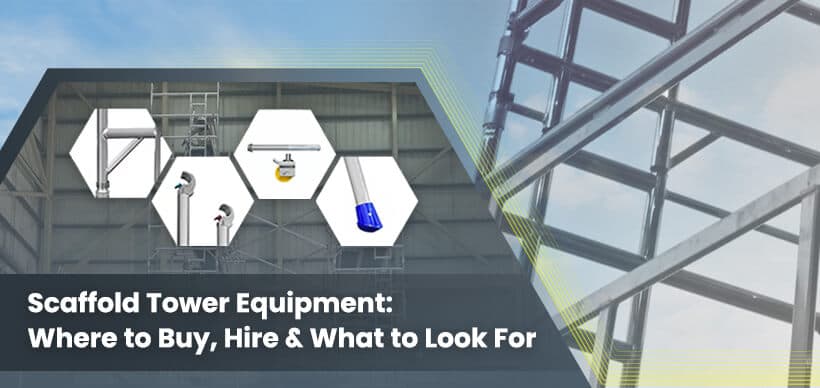
Choosing the right scaffold tower equipment is important when work needs to be carried out at height. A tower must be suitable for the job, correctly designed, in good condition and used according to the manufacturer's instructions.
Buying or hiring the cheapest tower is not always the best option. The equipment needs to match the working height, platform requirements, site conditions, load, access needs and type of work being carried out.
For standard mobile access towers in the UK, BS EN 1004-1:2020 is the key product standard. Other tower configurations, such as linked, cantilever, large deck and towers on base plates, can fall under BS 1139-6:2021 instead.
This guide explains what to check before you buy or hire scaffold tower equipment, what components matter, and how to choose equipment that is suitable for your work.
If you are still deciding which equipment is suitable, PASMA Training Explained: The Complete Guide to Courses, Cards & Certification provides a wider background on PASMA training and competence.
What Is Scaffold Tower Equipment?
Scaffold tower equipment is a temporary access system that gives workers a raised working platform. A mobile access tower normally consists of prefabricated components that are assembled to create a stable structure.
A typical tower may include:
● Aluminium or other approved structural frames
● Working platforms
● Trapdoor platforms
● Guardrails
● Toeboards
● Castors or wheels
● Stabilisers or outriggers
● Bracing components
● Access ladders or stair systems
● Platform supports
● Horizontal and diagonal braces
● Manufacturer's instruction manual
The exact components depend on the tower design and configuration.
A standard mobile access tower covered by EN 1004-1 is designed as a mobile structure with four legs and wheels. The standard also sets requirements for its design, dimensions, loads and safety features.
It is important not to assume that every product advertised as a "scaffold tower" is the same. Some towers are designed for configurations outside the scope of EN 1004-1 and may need to meet different requirements.
Where Can You Buy Scaffold Tower Equipment?
Scaffold towers can be purchased from specialist access equipment suppliers, manufacturers and other reputable equipment distributors.
When buying equipment, the supplier should be able to provide clear information about:
● The manufacturer
● The tower model
● Maximum platform height
● Maximum working height where stated
● Safe working load
● Applicable product standard
● Available configurations
● Required stabilisers or outriggers
● Access method
● Assembly instructions
● Inspection and maintenance information
● Replacement components
PASMA does not sell mobile access towers or recommend one specific manufacturer. It advises buyers to use reputable manufacturers and check that the tower is properly certified.
A good supplier should not make it difficult to obtain the documentation for the equipment.
Buying from a specialist supplier
A specialist supplier can be useful when a business uses towers regularly. You may need several tower sizes, replacement components or a specific configuration.
Buying can make sense when:
● The equipment will be used regularly
● The same type of work is carried out often
● The tower will be kept for future projects
● Replacement components are available
● The business can manage inspection and storage
● The equipment has a clear maintenance history
Before buying, consider the total cost rather than just the initial purchase price.
A cheaper tower may become more expensive if replacement parts are difficult to obtain or if the equipment is not suitable for the work.
Where Can You Hire Scaffold Tower Equipment?
Hiring can be a practical choice when a tower is only required for a short project.
A reputable access equipment hire company should provide information about the tower, its configuration and the instructions needed for safe use.
Hiring may be suitable when:
● The tower is needed for a single project
● The required height changes between jobs
● Your business does not use towers often
● Storage space is limited
● You need a specialist configuration
● You want access to different equipment without buying it
PASMA recommends using a PASMA hire centre when hiring a mobile access tower because this provides additional reassurance about the equipment and supplier.
When collecting or receiving hired equipment, do not assume that it is ready for use simply because it came from a hire company. Check the equipment before assembly and follow the supplied instructions.
Buy or Hire: Which Is Better?
There is no single answer for every business.
The right option depends on how often the equipment is needed, how long it will be used and what type of tower is required.
Factor | Buying | Hiring
Regular use | Often suitable | Can become expensive over time
Short | project | May not be cost-effective | Often practical
Storage Required | Usually less storage needed
Maintenance | Your responsibility | Equipment is supplied by hire company
Equipment choice | Limited to owned fleet | More options can be available
Specialist tower | May require a large investment | Useful for occasional work
Replacement parts | Need to be managed | Usually handled through supplier
Long-term use | Can offer better value | Depends on hire period
The decision should also consider transport, storage, inspection, repairs and future use.
For occasional work, hiring can avoid the need to store equipment between projects. For regular tower work, purchasing may provide a more practical long-term solution.
Check the Product Standard Before Buying
One of the first things to check is whether the equipment meets the correct standard for its design.
For standard mobile access towers, EN 1004-1:2020, published in the UK as BS EN 1004-1:2020, covers mobile access and working towers made from prefabricated elements. It covers standard mobile towers from ground level up to 8m outdoors and up to 12m indoors, within the conditions of the standard.
However, not every tower configuration falls within this standard.
BS 1139-6:2021 covers prefabricated tower scaffolds using EN 1004 components in configurations outside the scope of EN 1004-1. Examples include:
● High-level towers outside EN 1004 height limits
● Linked towers
● Cantilever towers
● Large deck towers
● Stepped towers
● Towers on base plates
● Towers with more than one working platform
● Towers subject to higher wind loads
This is why the equipment configuration matters as much as the brand or price.
What to Look For in a Scaffold Tower
A safe tower is more than a collection of aluminium frames. Every component has a purpose, and the complete system should be used as designed.
1. Correct working height
Start by deciding how high the working platform needs to be.
Do not choose equipment simply because it is the tallest option available. A tower should be suitable for the task and site.
Consider:
● Platform height
● Indoor or outdoor use
● Available headroom
● Ground conditions
● Required reach
● Obstructions
● Wind exposure
● Access requirements
Remember that platform height and working height are not always the same thing. Do not assume that a tower advertised with a particular working height has the same platform height.
Always check the manufacturer's specifications.
2. Platform design
The working platform is one of the most important parts of the tower.
A suitable platform should be designed for the specific tower system. EN 1004-compliant towers use purpose-designed platforms with safe trapdoor access rather than loose boards or makeshift platforms.
Check:
● Platform dimensions
● Maximum permitted load
● Trapdoor access
● Platform security
● Platform condition
● Compatibility with the tower
● Correct installation
Never replace a purpose-designed platform with an unsuitable board or improvised material.
3. Guardrails and toeboards
Guardrails help prevent people from falling from the working platform.
The tower should have the correct guardrail components for its design and configuration.
Check that:
● Guardrails are present
● Components are undamaged
● Guardrails are correctly positioned
● Connections are secure
● Toeboards are fitted where required
● No components have been modified
Never remove a guardrail simply to make it easier to move materials.
If components have to be removed or a tower is altered, the equipment must be correctly reinstated and checked before use.
4. Stabilisers and outriggers
Stabilisers help provide stability when the tower is assembled.
They are not optional accessories that can simply be ignored. EN 1004 towers are supplied with the required stabilising arrangements for their intended configurations.
The correct stabiliser setup depends on the tower and the height at which it is assembled.
Do not:
● Leave out required stabilisers
● Use damaged stabilisers
● Substitute unrelated components
● Change the configuration without following the manufacturer's instructions
If the instructions require stabilisers for a particular height, fit them as specified.
5. Castors and wheels
Mobile towers use wheels or castors to allow the structure to be moved when permitted.
Before use, check that:
● Castors are the correct type
● Wheels are not damaged
● Brakes work correctly
● Castors are securely attached
● The tower is stable when stationary
A tower should only be moved in the way permitted by its design and instructions.
Do not improvise with replacement wheels or use incompatible components.
6. Access system
Safe access is another important feature.
An EN 1004 tower should have a built-in means of access. Users should not climb the outside of the structure or use a separate ladder leaning against the tower as a substitute for the designed access system.
Depending on the tower, access may involve:
● Vertical ladders
● Inclined ladders
● Stair ladders
● Stairways
The right choice depends on the tower design and how frequently workers need to move between ground level and the platform.
If workers regularly carry tools or materials, the access arrangement should be considered during equipment selection.
Check the Tower's Load Capacity
Load capacity is easy to overlook when choosing access equipment.
The total load can include more than the person standing on the platform.
Think about:
● Workers
● Hand tools
● Materials
● Equipment
● Containers
● Other items placed on the platform
The tower must not be loaded beyond its stated capacity.
PASMA's guidance explains that EN 1004 towers can have different load classes. For example, Class 2 is 1.5 kN/m² and Class 3 is 2 kN/m², with the load distributed across the platform surface as specified.
Always use the manufacturer's instructions to confirm the permitted load for the exact tower and configuration.
Consider the Ground and Work Area
The tower may be correctly assembled but still unsuitable for a particular location.
Before selecting equipment, look at the work area.
Check for:
● Uneven ground
● Slopes
● Holes
● Soft surfaces
● Overhead obstructions
● Doorways
● Traffic routes
● Open edges
● Electrical hazards
● Wind exposure
● Other workers or vehicles
The equipment must be suitable for the environment in which it will be used.
A standard mobile tower is not automatically suitable for every outdoor situation.
Indoor and Outdoor Tower Use
The environment can affect the tower configuration and permitted height.
EN 1004-1 allows standard mobile access towers to be used within specified height limits, with maximum heights of 8m outdoors and 12m indoors under the standard's conditions.
Outdoor work also creates additional considerations, particularly wind.
Always check the manufacturer's instructions for:
● Maximum permitted height
● Wind restrictions
● Stabiliser requirements
● Conditions for moving the tower
● Whether the tower must be dismantled or relocated in certain weather
Do not treat an indoor tower configuration as automatically suitable for outdoor use.
New or Used Scaffold Tower Equipment?
Used equipment can be an option, but condition and compatibility matter.
A low purchase price does not make a used tower a good choice if important parts are missing or damaged.
Before buying used equipment, check:
● Frames
Look for:
● Bends
● Cracks
● Distortion
● Corrosion
● Damaged joints
● Unauthorised modifications
● Platforms
Check for:
● Cracks
● Damage
● Loose fittings
● Missing trapdoors
● Worn surfaces
● Signs of alteration
● Guardrails and braces
Check that all required components are present and undamaged.
● Castors and stabilisers
Make sure the wheels, brakes and stabilisers are compatible with the tower and in good condition.
● Documentation
Ask for:
● Manufacturer information
● Current instruction manual
● Product identification
● Configuration information
● Certification information where applicable
● Previous inspection or maintenance information where relevant
If you cannot establish what the equipment is or how it should be assembled, buying it may create unnecessary risk.
Why the Manufacturer's Manual Matters
The instruction manual is an important part of the equipment.
It should explain how the tower is:
● Assembled
● Configured
● Stabilised
● Accessed
● Used
● Moved
● Dismantled
PASMA states that users should always follow the manufacturer's or supplier's instruction manual and that the manual should be available to people erecting, using and supervising the tower.
Do not rely on memory or a generic tower manual.
Different tower models can use different components and assembly methods.
PASMA also provides a library of manufacturer instruction manuals for many mobile access towers.
Scaffold Tower Inspection Before Use
Equipment should be checked before it is used.
Look for obvious problems such as:
● Missing components
● Bent frames
● Cracked platforms
● Damaged guardrails
● Loose connections
● Damaged castors
● Missing stabilisers
● Corrosion
● Incorrect configuration
● Unauthorised modifications
The person carrying out the check should be competent to identify problems with the equipment.
PASMA guidance states that users must be competent to build and dismantle the tower and carry out the required pre-use inspection.
For construction work, additional inspection requirements can apply depending on the circumstances and equipment. HSE guidance states that tower scaffolds used for construction work where a person could fall 2m require inspection after assembly and at suitable intervals, including every seven days while remaining on the same site, subject to the applicable requirements.
Always follow the current legal requirements and site inspection arrangements.
What Makes a Scaffold Tower Supplier Reliable?
Whether you are searching for equipment to buy or hire, the supplier should be able to answer practical questions about the tower.
Ask:
1. Who manufactured the tower?
2. What standard does it comply with?
3. What is the maximum platform height?
4. What is the permitted load?
5. Is it suitable for indoor or outdoor use?
6. Which stabilisers are required?
7. What access system is supplied?
8. Is the current instruction manual available?
9. Are replacement components available?
10. What checks have been completed if the tower is hired or used?
A supplier that cannot provide basic information about the equipment should be treated with caution.
Avoid Cheap or Unverified Scaffold Towers
Price should not be the main factor when choosing access equipment.
Be particularly careful with products advertised as:
● DIY towers
● Universal scaffold towers
● Cheap aluminium towers
● Generic mobile towers
● Second-hand towers with missing parts
The problem is not simply the label. The important question is whether the complete product is properly designed, certified where required, supplied with the correct components and suitable for the intended use.
PASMA highlights the difference between compliant EN 1004 towers and products that lack features such as purpose-designed platforms, built-in access, required stabilisers and suitable guardrails.
Scaffold Tower Equipment Checklist
Before buying or hiring, use this simple checklist.
Check | What to confirm
Product standard | Correct standard for the tower configuration
Manufacturer | Identifiable and reputable
Platform | Correct type, size and load capacity
Access | Built-in access suitable for the tower
Guardrails | Correct components and configuration
Toeboards | Present where required
Stabilisers | Correct type and quantity
Castors | Suitable, secure and functional
Height | Suitable for the work and environment
Load | Adequate for people, tools and materials
Manual | Current instructions available
Condition | No visible damage or unauthorised changes
Site | Ground and surrounding conditions suitable
Inspection | Required checks completed
This checklist can help you compare equipment before making a purchasing or hire decision.
Do You Need Training to Use Scaffold Tower Equipment?
Buying or hiring a tower does not automatically make someone competent to assemble and use it.
People using mobile access towers need suitable training and competence for the work they are expected to carry out.
PASMA's Towers for Users training covers the safe assembly, dismantling, alteration, movement and use of mobile access towers.
For a broader explanation of tower training and what the course covers, see Tower Scaffold Training: What the Course Covers and Who Needs It.
The important point for equipment buyers and managers is that equipment selection and user competence are connected. Buying a compliant tower does not remove the need for appropriate training, planning or supervision.
When Should You Hire Specialist Tower Equipment?
Standard towers are not suitable for every access requirement.
A project may require specialist equipment where there are:
● Large working areas
● Restricted access
● Stairways
● Cantilever requirements
● Linked structures
● High-level access
● Multiple working platforms
● Unusual site layouts
Some of these configurations fall outside the standard EN 1004-1 mobile tower design and may be covered by BS 1139-6 instead.
If the project requires a specialist configuration, speak to an experienced supplier before ordering a standard tower.
The supplier should be able to explain the equipment's limitations and provide the correct documentation.
Scaffold Tower Equipment for Contractors
Contractors often need equipment that can be used across several types of work.
When building an equipment fleet, consider having different tower options rather than relying on one tower for every job.
For example, your requirements may include:
● Compact towers for restricted areas
● Standard mobile towers for general work
● Towers with stair access
● Low-level access equipment
● Specialist towers for unusual layouts
The correct mix depends on the work your business carries out.
A fleet should also include a process for checking equipment condition, storing components correctly and removing damaged items from service.
How AFI Training Can Help
AFI Training provides PASMA training for people who need to work safely with mobile access towers.
Training can help workers understand how tower equipment should be assembled, altered, moved and used in line with the relevant requirements.
AFI Training also provides training options for businesses that need to develop workforce competence, including PASMA tower training and other working-at-height courses.
For businesses buying or hiring tower equipment, combining suitable equipment with properly trained users is an important part of a safe access strategy.
Conclusion
Choosing scaffold tower equipment should be based on more than price.
Whether you buy new equipment, purchase used towers or hire them for a project, check the product standard, configuration, platform height, load capacity, access system, stabilisers, condition and documentation.
For standard mobile access towers, look for equipment designed and certified to the applicable BS EN 1004-1 requirements. If the tower has a specialist configuration, check whether another standard, such as BS 1139-6, applies.
Most importantly, use the manufacturer's instructions and make sure the people assembling, inspecting and using the tower are competent to do so.
For equipment-specific training questions, PASMA vs IPAF: What's the Difference and Do You Need Both? can also help explain where tower training fits compared with powered access training.
Frequently Asked Questions
1. What should I check before buying a scaffold tower?
Check the applicable product standard, manufacturer, platform height, load capacity, access system, guardrails, stabilisers, castors, instruction manual and overall condition. Make sure the equipment is suitable for the job and working environment.
2. Is EN 1004-1 the standard for mobile access towers?
Yes. EN 1004-1:2020, published in the UK as BS EN 1004-1:2020, is the product standard for standard mobile access and working towers made from prefabricated components.
3. Is it better to buy or hire a scaffold tower?
It depends on how often you need it. Buying can make sense for regular use, while hiring can be practical for short-term or occasional projects.
4. Can I buy a used scaffold tower?
Yes, but check its condition, identification, compatibility of components, product standard, instruction manual and inspection history. Do not use a tower if essential components are missing or damaged.
5. What is the difference between a scaffold tower and a mobile access tower?
The terms are often used interchangeably, but different tower designs fall under different standards. A standard mobile access tower covered by EN 1004-1 is a specific type of mobile prefabricated tower. Other configurations can fall under BS 1139-6.
6. What height can an EN 1004 tower reach?
Under EN 1004-1, standard mobile towers can be built up to 8m outdoors and 12m indoors, subject to the standard's conditions and the manufacturer's configuration instructions.
7. Can I use any platform with my scaffold tower?
No. Platforms should be compatible with the tower and designed for that system. Do not use loose boards or improvised platforms as substitutes for the correct equipment.
8. Do scaffold towers need stabilisers?
The required stabilising arrangement depends on the tower design and configuration. EN 1004 towers are supplied with stabilisers as part of the system where required. Follow the manufacturer's instructions for the exact setup.
9. Where can I find scaffold tower manufacturers near me?
Search for established access equipment manufacturers or suppliers and check whether they provide product certification, manuals, replacement parts and technical information. PASMA also provides information about registered manufacturers.
10. Can I hire an HSS scaffold tower?
If you are considering an HSS scaffold tower or another hire supplier, check the exact tower model, configuration, standard, condition and documentation before use. The important factor is whether the equipment is suitable and supplied with the required information.
11. Do I need PASMA training to use a scaffold tower?
Suitable training and competence are important for people who assemble, dismantle, alter, inspect and use mobile access towers. PASMA provides training designed to develop competence in tower use.
12. What should I do if a scaffold tower is damaged?
Do not use damaged equipment. Remove it from service, report the defect and have it assessed by a competent person or the appropriate supplier. Replace damaged components with the correct parts rather than improvising repairs.
13. What should I look for when hiring a scaffold tower?
Check the tower's standard, model, platform height, load capacity, configuration, stabilisers, access system, condition and instruction manual. Also confirm what checks have been completed by the hire company.
14. Can I use a mobile tower outdoors?
Some mobile towers are designed for outdoor use, but the permitted height and conditions depend on the tower design and manufacturer's instructions. Wind conditions are particularly important for outdoor use.
15. Can I search for a PASMA scaffold tower near me?
Yes. If you are looking for equipment or training locally, searches such as “PASMA scaffold near me”, “scaffold tower hire near me” or “PASMA training near me” can help identify local options. Always check the supplier's credentials and the equipment specifications before booking or buying.