
Tower Scaffold Training: What the Course Covers and Who Needs It
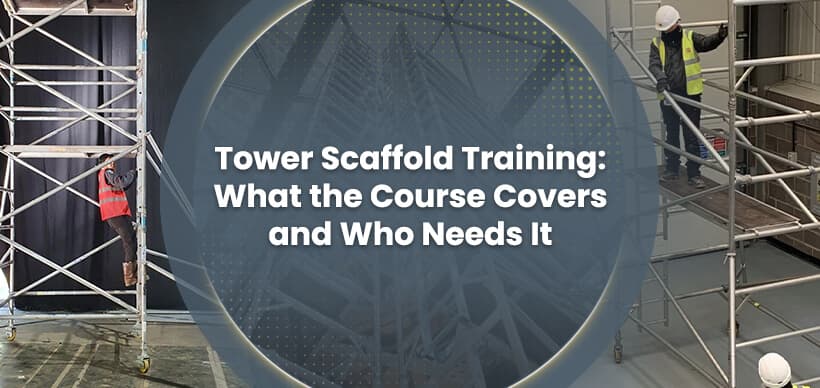
Tower scaffolds are widely used for short-term work at height because they can provide a stable working platform that is moved between work areas when needed. However, using a tower safely involves more than simply putting the sections together. Workers need to understand how the tower should be assembled, inspected, moved, altered and used.
This is where tower scaffold training becomes important. Proper training helps workers understand the equipment they are using and the hazards that can arise when a scaffold tower is incorrectly assembled or used.
If you are new to PASMA training, our complete guide explains what PASMA is, what the qualification means and how PASMA training works. PASMA Training Explained: The Complete Guide to Courses, Cards & Certification
What Is Tower Scaffold Training?
Tower scaffold training teaches workers how to safely assemble, use, inspect, move, alter and dismantle suitable mobile access towers.
The training is particularly relevant to people who regularly work with mobile scaffold towers on construction sites, maintenance projects, commercial buildings and other workplaces where temporary access is required.
A properly trained worker should understand:
● How a tower is assembled correctly
● How to follow the manufacturer's instructions
● How to identify damaged or unsuitable components
● How to check the working area before assembly
● How to inspect the completed tower
● How to safely climb and work from the platform
● How to move a tower safely when permitted
● How to recognise common hazards
● When a tower should not be used
● When further advice or specialist training is needed
The exact training required depends on the type of tower and the work being carried out.
Why Is Scaffold Tower Training Important?
A scaffold tower can provide a useful working platform, but incorrect assembly or poor use can create serious risks.
The Health and Safety Executive (HSE) states that work at height should be properly planned, appropriately supervised and carried out by competent people. Competence can include suitable skills, knowledge, experience and training.
For this reason, scaffold tower training is not simply about obtaining a card. It is about developing the knowledge and practical skills needed to use access equipment safely.
Common problems can include:
● Incorrect assembly
● Missing or damaged components
● Incorrect stabiliser positioning
● Unsafe movement
● Working on an unsuitable surface
● Using a tower in unsuitable weather
● Failing to inspect the tower
● Making unauthorised alterations
● Overloading the platform
● Using the wrong tower configuration
Training helps workers recognise these problems before they become incidents.
What Does PASMA Tower Training Cover?
PASMA provides training for people who use mobile access towers. Its Towers for Users course covers the safe assembly, dismantling, alteration, movement and use of towers.
A typical PASMA tower course combines theory with practical training. This means delegates not only learn the principles behind safe tower use; they also get practical experience.
The course covers areas such as:
Tower Components
Delegates learn to identify the main parts of a mobile access tower and understand how those components work together.
This can include:
● Frames
● Platforms
● Guardrails
● Toeboards
● Braces
● Castors
● Stabilising equipment
● Access components
Understanding each component makes it easier to identify missing, damaged or incorrectly fitted parts.
Assembly and Dismantling
One of the most important parts of mobile towers training is learning how to assemble and dismantle a tower safely.
Delegates learn how to follow the correct sequence and manufacturer's instructions rather than relying on assumptions or previous experience.
Incorrect assembly can affect the stability and safe use of the completed tower.
Moving a Tower
Some mobile towers are designed to be moved, but movement must be carried out correctly and only when the equipment and conditions allow it.
Training helps operators understand:
● When a tower can be moved
● How the work area should be checked
● What must be considered before movement
● How people should be positioned
● When movement should not take place
A tower should never be moved simply because it has castors.
Inspection
Inspection is another important part of mobile scaffold tower training.
Before using a tower, workers need to check that it is suitable and correctly assembled. They should also know how to identify defects or conditions that could affect safe use.
A basic inspection may consider:
● Tower components
● Bracing
● Platforms
● Guardrails
● Toeboards
● Access arrangements
● Castors
● Stabilising equipment
● Ground conditions
● Overall stability
If something is damaged, missing or incorrectly fitted, the tower should not simply be used and the issue ignored.
Who Needs Tower Scaffold Training?
Anyone who is required to assemble, dismantle, alter, move or use a mobile access tower should have the appropriate level of competence for their role.
This can include:
● Construction workers
● Maintenance workers
● Facilities teams
● Installers
● Contractors
● Building services workers
● Engineers
● Supervisors
● Site workers who regularly use towers
The correct course depends on what the individual is expected to do.
For example, someone who only manages tower-related activities may require different training from a worker who physically assembles and dismantles towers.
Is PASMA Training the Same as Scaffold Tower Training?
The terms are often used interchangeably, but they are not always identical.
Scaffold tower training is a general description of training that teaches people how to work safely with tower scaffolds.
PASMA training refers specifically to training provided through the PASMA scheme.
PASMA is the Prefabricated Access Suppliers' and Manufacturers' Association and is widely associated with mobile access tower training in the UK.
Therefore, when someone searches for mobile tower training, scaffold tower training or PASMA tower training, they may be looking for the same type of practical competence but using different terminology.
What Are PASMA Towers for Users Training?
PASMA's Towers for Users course is designed for people who need to assemble, dismantle, alter, move and use mobile access towers.
The course includes both theory and practical elements.
According to PASMA, the course covers towers designed to relevant standards, including EN 1004, and successful delegates receive a PASMA PhotoCard and certificate.
The standard course is generally completed in one day, although exact arrangements can depend on the training provider and location.
The qualification is generally valid for five years, subject to the applicable PASMA requirements and regional arrangements.
What Is Included in a PASMA Tower Course?
A typical PASMA tower course can include the following areas:
Training area | What delegates learn
Tower components | Identification and purpose of key components
Assembly | Correct procedures for building the tower
Dismantling | Safe dismantling procedures
Alteration | How changes should be managed safely
Movement | Safe conditions and procedures for moving towers
Inspection | How to identify defects and unsafe conditions
Hazards | Common risks associated with tower use
Safe working | Good practice when working from a tower
Legislation | Relevant health and safety requirements
Practical assessment | Demonstration of practical competence
Theory assessment | Knowledge of safe tower use
This combination of theory and practical work is important because understanding a rule is different from being able to apply it correctly.
What Is Aluminium Scaffold Tower Training?
Aluminium scaffold tower training refers to training for workers using lightweight aluminium mobile access towers.
Aluminium towers are common because they can be easier to handle than heavier structures. However, their lighter construction does not remove the need for correct assembly, inspection and safe use.
Workers still need to understand:
● The manufacturer's instructions
● Component compatibility
● Correct assembly sequence
● Stabilisation
● Ground conditions
● Safe access
● Platform loading
● Movement procedures
● Inspection requirements
The material used to construct the tower does not by itself determine whether a worker is competent.
Mobile Towers Training: What Are the Main Hazards?
Before using a mobile tower, workers should understand the hazards associated with the equipment and the working environment.
● Falls from Height
A poorly assembled tower or incorrect use of access equipment can increase the risk of falls.
Guardrails, toeboards, platforms and safe access arrangements all need to be suitable and correctly installed.
● Uneven Ground
Tower scaffolds need a suitable supporting surface.
Soft, uneven or unstable ground can affect the tower's stability. Workers should assess the area before assembly and follow the manufacturer's requirements.
● Wind and Weather
Wind can have a major effect on temporary access equipment.
Outdoor work should take account of weather conditions and any limits specified by the manufacturer or equipment guidance.
● Overhead Hazards
Before assembling or moving a tower, workers should check the surrounding area for hazards such as overhead electrical lines, structures and other obstructions.
● Unauthorised Alterations
Workers should not make changes to a tower unless those changes are permitted by the manufacturer and appropriate instructions.
Adding makeshift components or changing the tower configuration can affect its stability and safe performance.
● Incorrect Movement
A tower should only be moved using the correct procedure and when the equipment is designed and configured for movement.
Workers should understand when movement is prohibited and what checks are required before moving the equipment.
Tower Scaffold Training and Working at Height
Tower scaffolds are one type of equipment used for work at height.
UK employers have responsibilities under the Work at Height Regulations 2005 to ensure work at height is properly planned and carried out safely.
This includes selecting suitable equipment and ensuring workers have the necessary competence.
Training alone does not make every work-at-height activity safe. Employers also need to consider:
● The work being carried out
● The height involved
● The duration of the task
● The working environment
● Ground conditions
● Weather
● Access and egress
● Equipment selection
● Inspection
● Supervision
● Emergency arrangements
The equipment and method should be suitable for the actual task.
Do You Need a PASMA Qualification to Use a Tower?
There is an important difference between legal competence and simply holding a particular card.
UK health and safety law focuses on competence and suitable training rather than stating that every person using every tower must hold a PASMA card.
However, where workers are required to assemble, dismantle, alter, move or use mobile access towers, employers should ensure they have appropriate training and competence for the equipment and task.
PASMA training is one recognised route for developing this competence.
Employers may also have site-specific requirements that require workers to hold particular qualifications or cards.
PASMA Scaffold Training vs General Tower Training
It is useful to understand what each term means.
Term | Meaning
Tower scaffold training | General term for training related to tower scaffold use
Mobile tower training | Training focused on mobile access towers
Scaffold tower training | Another commonly used term for tower-related training
PASMA tower training | Training delivered under the PASMA scheme
PASMA tower course | A PASMA course covering relevant tower-user competence
PASMA scaffolding course | Search term often used for PASMA tower training
Aluminium scaffold tower training | Training focused on safe use of suitable aluminium towers
The course should always match the equipment and duties the worker will perform.
What Is the Difference Between Towers for Users and Other PASMA Courses?
PASMA offers several categories of training rather than one course for every situation.
For example, there are courses covering standard towers, low-level access and specialist tower configurations.
If your work involves a particular tower type, it is important to check that your training covers that equipment.
For a wider explanation of the available options, including standard, low-level and combined courses, read our guide to Explained PASMA Course Types.
Can a PASMA Course Cover Practical Tower Assembly?
Yes. PASMA's Towers for Users training includes practical training.
This is particularly useful because tower assembly is a hands-on activity. Workers need to understand how components fit together and how safe working methods are applied in practice.
Practical training can help delegates build confidence in:
● Component identification
● Assembly sequences
● Safe access
● Guardrail installation
● Stabilisation
● Inspection
● Dismantling
● Safe movement
The practical element should always be carried out using appropriate equipment and under competent instruction.
What Should You Check Before Using a Scaffold Tower?
Before using a tower, workers should carry out the checks required by the manufacturer's instructions, site procedures and relevant guidance.
Important considerations include:
1. Is the tower suitable for the task?
2. Is it correctly assembled?
3. Are all required components present?
4. Is the tower on a suitable surface?
5. Are stabilisers fitted where required?
6. Is the access system correctly installed?
7. Are guardrails and toeboards in place?
8. Are there any damaged components?
9. Are weather conditions suitable?
10. Is the tower within its permitted configuration and load limits?
If a problem is identified, the tower should not be used until the issue has been properly addressed.
How Long Does Scaffold Tower Training Take?
The duration depends on the course.
PASMA's Towers for Users course is normally a one-day course. Other PASMA courses can have different durations.
For example, low-level access training is generally shorter, while specialist training may have different requirements.
The correct course should be selected according to the type of tower and the duties being performed rather than simply choosing the shortest available option.
Once you have completed the relevant tower training, it is also important to understand how your PASMA card and certificate work, including validity and renewal.
How Often Should Tower Training Be Refreshed?
PASMA qualifications are generally valid for five years, depending on the specific qualification and applicable requirements.
However, employers should not rely only on the expiry date.
Additional training may be appropriate when:
● A worker has not used towers for a long period
● New equipment is introduced
● The tower system changes
● The worker's responsibilities change
● A competence issue is identified
● An incident or near miss occurs
● Manufacturer instructions change
● Site conditions introduce new risks
Refresher training should be considered as part of an overall competence management process.
How AFI Training Can Help
AFI Training provides accredited training for people who need to develop safe working-at-height competence.
Training can be delivered through established training centres and, where suitable arrangements are available, on-site training can help employers train teams using relevant workplace equipment.
The key objective is not simply to complete a scaffold course. Workers should leave training with a clear understanding of how to approach tower assembly, use, inspection, movement and dismantling safely.
Choosing the Right Tower Scaffold Training
Before booking training, consider the work your team actually carries out.
Ask:
● What type of tower do workers use?
● Do they assemble and dismantle it?
● Do they only use an already assembled tower?
● Do they work with low-level access equipment?
● Are specialist tower configurations involved?
● Is practical training required?
● Does the employer or site require a specific PASMA category?
● Are workers new to tower access equipment?
Choosing training based on these questions helps avoid selecting a course that does not cover the equipment or activities involved.
Tower Scaffold Training Checklist
Use this quick checklist when planning training for your team:
Question | Why it matters
What tower will be used? | Training should match the equipment
Who will assemble it? | Assembly requires suitable competence
Who will dismantle it? | Dismantling must follow a safe procedure
Will the tower be moved? | Movement introduces additional risks
Is the tower used outdoors? | Weather and ground conditions need consideration
Is specialist equipment involved? | Additional training may be required
Does the site require PASMA? | Site rules may specify particular training
When was the worker last trained? | Competence may need reviewing
Has equipment changed? | New systems may require additional instruction
FAQs About Tower Scaffold Training
What is tower scaffold training?
Tower scaffold training teaches workers how to safely assemble, dismantle, alter, move, inspect and use suitable mobile access towers.
Is tower scaffold training the same as PASMA training?
Not exactly. Tower scaffold training is a general term, while PASMA training refers to training delivered under the PASMA scheme.
What is PASMA tower training?
PASMA tower training is training designed to develop competence in the safe use of mobile access towers. The Towers for Users course includes both theory and practical elements.
Who needs mobile tower training?
Workers who need to assemble, dismantle, alter, move or use mobile access towers may need appropriate training and competence for their role and equipment.
How long is PASMA tower training?
The PASMA Towers for Users course is generally completed in one day. Other PASMA courses may have different durations.
Is there practical training on a PASMA tower course?
Yes. The Towers for Users course includes practical training as well as theory.
Do you need PASMA to use a scaffold tower?
The law focuses on suitable competence rather than requiring a PASMA card for every tower user. However, employers and sites may require PASMA training, and it is a recognised route to developing tower-user competence.
What does aluminium scaffold tower training cover?
It covers the safe principles involved in using suitable aluminium mobile towers, including assembly, inspection, access, stability, movement and dismantling where applicable.
How often does PASMA tower training need renewing?
PASMA qualifications are generally valid for five years, although the exact requirements can vary by qualification and region. Employers should also review competence whenever circumstances change.
Can I take a PASMA tower course if I am a beginner?
Yes. PASMA's Towers for Users course is designed for new and existing users, subject to the course's entry requirements.
Is scaffold tower training required by law?
There is no blanket legal rule saying every tower user must hold a PASMA card. However, employers must ensure people carrying out work at height are competent and suitably trained for the work and equipment involved.
Can tower training be completed onsite?
Some training providers offer onsite delivery where the workplace and equipment meet the requirements for the course.
What is mobile scaffold towers training?
It is training focused on the safe assembly, use, inspection, movement and dismantling of mobile scaffold towers.
Is a scaffold course enough for every type of tower?
No. Training should match the type of tower, configuration and activities the worker is expected to undertake. Specialist tower configurations may require additional training.
What should I do if a tower is damaged?
Do not use damaged or unsuitable equipment. Remove it from service where appropriate and report the issue according to your workplace procedure. The equipment should only return to use once it has been properly assessed and made safe.
Conclusion
Tower scaffold training gives workers the knowledge and practical skills needed to work safely with mobile access towers. It covers much more than simply putting a tower together. Safe tower use also involves inspection, stability, movement, access, weather, equipment condition and following the manufacturer's instructions.
For businesses using mobile towers regularly, choosing suitable training and keeping worker competence up to date can form an important part of a wider work-at-height safety system.
Whether you call it mobile tower training, scaffold tower training, mobile scaffold towers training or PASMA tower training, the key is to make sure the training matches the equipment and work being carried out.